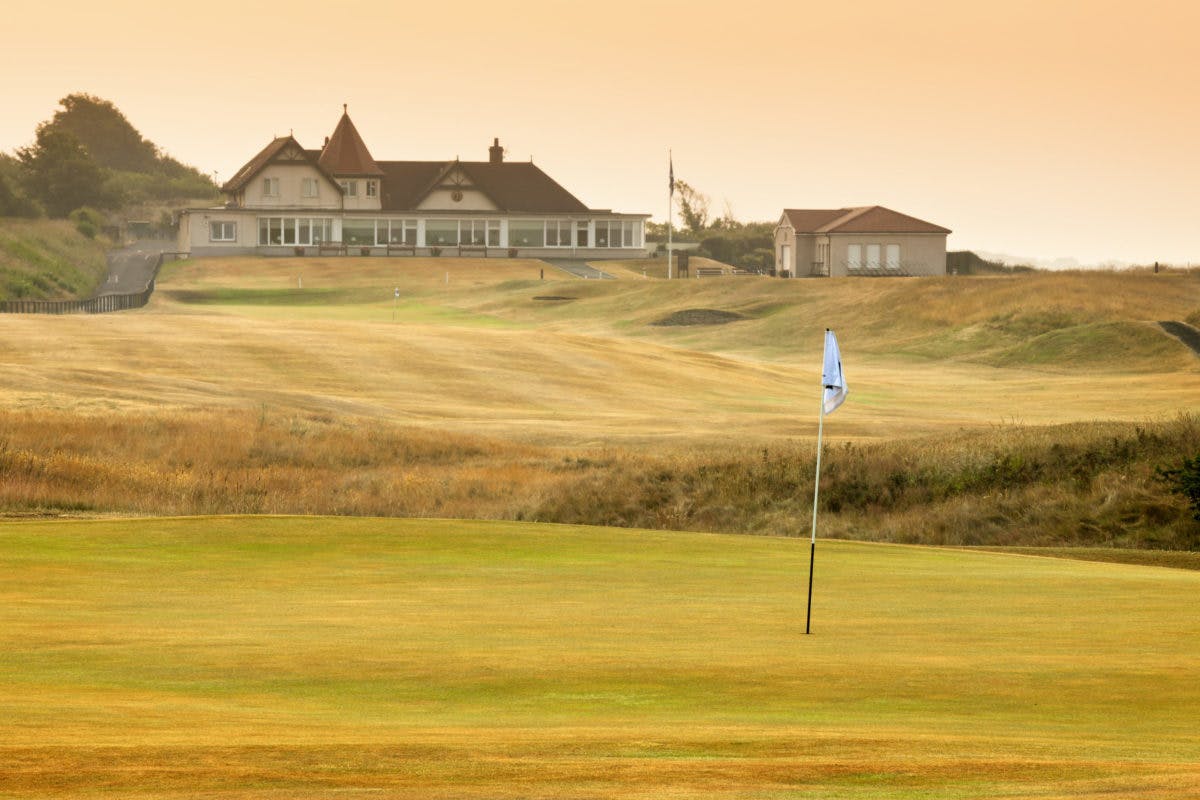
St Andrews 'New Course'
New Course
New Course was designed by Old Tom Morris as the first extension alongside the Old Course at St Andrews and, despite its name, is one of the oldest golf courses in the world. The layout sits directly west of the Old Course and follows the same traditional linksland.
Compared to its famous neighbour, the New Course features more clearly defined holes and more distinct green sites. It offers a more direct and technical challenge, placing greater emphasis on precise positioning and controlled ball striking.
St Andrews 'Castle Course'
Castle Course
The Castle Course represents a clear departure from the traditional links landscape of St Andrews. Set on cliffs to the southeast of the town, the course features significant elevation changes and sweeping views over the North Sea.
The design is distinctly modern, with strong visual framing, strategically positioned bunkers, and greens that demand precision. While less traditional in character than the historic links nearby, the Castle Course adds a bold and physically different dimension to the St Andrews golf offering.
Lundin Golf Club
A unique links experience
Lundin Golf Club sits in the heart of Fife, just a short distance from St Andrews, and offers a classic, pure links experience along Scotland’s east coast. The course makes full use of the natural coastal landscape, with open fairways, low dunes, and a constant influence of the wind shaping play.
Historical development
Founded in 1868, Lundin has a unique shared history with Leven Links Golf Club. Originally, both clubs shared the same course, but over time, approximately half of the original holes became part of Leven Links. As a result, Lundin developed new holes on land that had previously served as the ladies’ course, creating the layout seen today.
This organic evolution—shaped by shared land use and even a former railway line crossing the area—has given Lundin its distinctive character. Today, the course stands as a layered piece of golfing history, where old and newer holes blend seamlessly, offering an authentic reflection of the development of golf in Fife.
Kingsbarns Golf Links
Authentic links experience
Kingsbarns Golf Links is one of Scotland’s most celebrated links courses, set along a spectacular stretch of coastline just outside St Andrews. It offers a pure golfing experience where sea, wind, and open landscape take centre stage.
Historical context and rediscovery
Although often considered modern, golf at Kingsbarns dates back centuries. The original course disappeared over time, and the land lay dormant until its potential was rediscovered in the late 20th century. The current course opened in 2000, designed by Kyle Phillips, who shaped the layout with respect for its historic links land.
Design and reputation
Phillips created Kingsbarns with wide fairways, rolling contours, and greens that sit naturally within the terrain. Nearly every hole offers sea views, enhancing the open and immersive feel of the course. In a short time, Kingsbarns has become a fixture in global rankings and a must-play destination for those visiting St Andrews.
Today, it stands as a true bucket-list course—a modern links with historic roots, where tradition and contemporary design come together in one of Scotland’s most striking golf settings.
Dumbarnie Links
Location and playing experience
Dumbarnie Links is a relatively recent addition to Scotland’s links landscape. Opened in 2020 and designed by Clive Clark, the course sits along the southern coast of Fife near Lundin Golf Club. Despite its modern origins, Dumbarnie is built entirely on classic linksland, right beside the Firth of Forth, with wide sandy beaches and natural dunes shaping its setting.
The routing stretches across open, rolling terrain with expansive sea views. Unlike many traditional linear links courses, Dumbarnie offers generous space from the tee, while demanding precision on approach shots to elevated and well-defended greens. Wind is a constant presence, influencing both club selection and shot shape. The combination of wide landing areas, subtle contours, and challenging green complexes creates a playing experience that is both accessible and demanding.
Contemporary architecture in a historic setting
Dumbarnie provides an interesting contrast within Fife, a region best known for its centuries-old golfing heritage. Rather than a restored classic, it represents a modern interpretation of links golf—designed to meet contemporary championship standards without overpowering the natural landscape.
Wide fairways, natural sandy expanses, and an open coastal setting give the course a distinctly maritime feel. A round at Dumbarnie feels modern, spacious, and visually striking, yet remains firmly rooted in the traditions of Scottish links golf.
Leven Links Golf Club
Historical context
Leven Links Golf Club, founded in 1867, is one of Scotland’s oldest golf clubs and part of the historic golfing heart of Fife. The course is steeped in history and has welcomed many notable golfers over the years. A fascinating detail is that a railway line once ran directly through the course—a tangible reminder of a time when golf and infrastructure developed side by side.
Another unique feature is that Leven Links shares part of its original 18-hole routing at the far end of the course with Lundin Golf Club. Both clubs quite literally play over the same stretch of coastal land—an unusual and compelling example of shared golfing heritage.
Playing style and characteristics
Leven Links is a classic links course with open fairways, natural dunes, and the constant influence of winds from the Firth of Forth. The layout feels spacious and natural, with holes that sit comfortably within the landscape and evoke a traditional out-and-back routing. Play is shaped by the elements and the firm-running turf.
A pure golf experience
At Leven Links, the focus is entirely on golf in its most original form, far removed from commercial influences. The course is unpretentious, honest, and deeply rooted in history—offering an authentic links experience for golfers who value tradition, simplicity, and the essence of the game.
The Golf House Club, Elie
Historical significance
The Golf House Club, Elie, founded in 1875, is one of the oldest golf clubs in the world and carries one of the most distinctive names in golf. Set in the heart of Fife along the coast of the Firth of Forth, the course lies in a region often regarded as the cradle of Scottish golf. Here, tradition is not a concept—it is something you experience on every hole.
Playing style and character
Elie is a classic links course with narrow fairways, strategically placed bunkers, and ever-changing wind conditions. Its most iconic feature is the periscope beside the first tee—a quirky yet functional detail used to check whether the fairway is clear before teeing off. It perfectly captures the spirit of Elie: distinctive, traditional, and true to the essence of links golf.
An authentic experience
The Golf House Club, Elie offers a pure and unpolished golf experience, far removed from luxury resorts and modern excess. Its natural setting, classic design, and deep-rooted history make it a favourite among purists. A round here is more than just golf—it’s a step into a living piece of the game’s heritage.
Crail Golf Club
A historic jewel
Crail Golfing Society, founded in 1786, is one of the oldest golf clubs in the world and sits along the spectacular east coast of Fife. The club is best known for the historic Balcomie Links, a classic links course traditionally associated with Old Tom Morris. With sweeping sea views and a routing rooted in golf’s earliest days, the course carries a timeless atmosphere.
Two 18-hole courses
Alongside the historic Balcomie Links, Crail also features the Craighead Links, a second full 18-hole course. More modern in style, Craighead occupies higher ground and offers broader fairways and panoramic coastal views. Together, the two layouts create a complete golfing experience where tradition and modern links design coexist naturally.
Challenging links golf
Both courses are shaped by natural dunes, open fairways, and the constant influence of the North Sea wind. The golf remains pure and uncomplicated, with the landscape itself acting as the primary defence. Crail is known for fair yet demanding links conditions that appeal to golfers of all abilities.
The culture of Crail
What makes Crail especially memorable is its close connection to the nearby village of Crail. This charming fishing village, with its picturesque harbour, narrow streets, and traditional pubs, gives the experience a deeply local and authentic character. After golf, you walk straight into the village itself—making Crail more than just a golf destination, but a place where golf, community, and Scottish coastal culture come together naturally.
Ladybank Golf Club
Historical context
Ladybank Golf Club, founded in 1879, holds a distinctive place within Scottish golf. While Scotland is globally renowned for its links courses, Ladybank is a rare and fully developed heathland layout—a style more commonly associated with regions like Surrey and Berkshire. This contrast is exactly what makes Ladybank so special and highly regarded by purists and professionals alike.
The club’s reputation was further elevated by a legendary exhibition match between Seve Ballesteros and Jack Nicklaus—two of the greatest players in history competing on a course known for its fairness, strategic demands, and exceptional conditioning.
Character and playing style
Ladybank is a textbook example of classic heathland golf: sandy soil, excellent drainage, pine-lined fairways, and heather framing the holes. The design demands precision, positioning, and discipline, with approaches to the greens carefully judged and often exacting. Unlike links golf, wind plays a lesser role here; instead, tactical play and ball control are paramount.
An authentic golf experience
This is a course for connoisseurs—golfers who appreciate strategy, subtlety, and tradition. That both Ballesteros and Nicklaus chose to compete here says everything about Ladybank: a fair, timeless course that proves Scottish golf is about far more than links alone.